



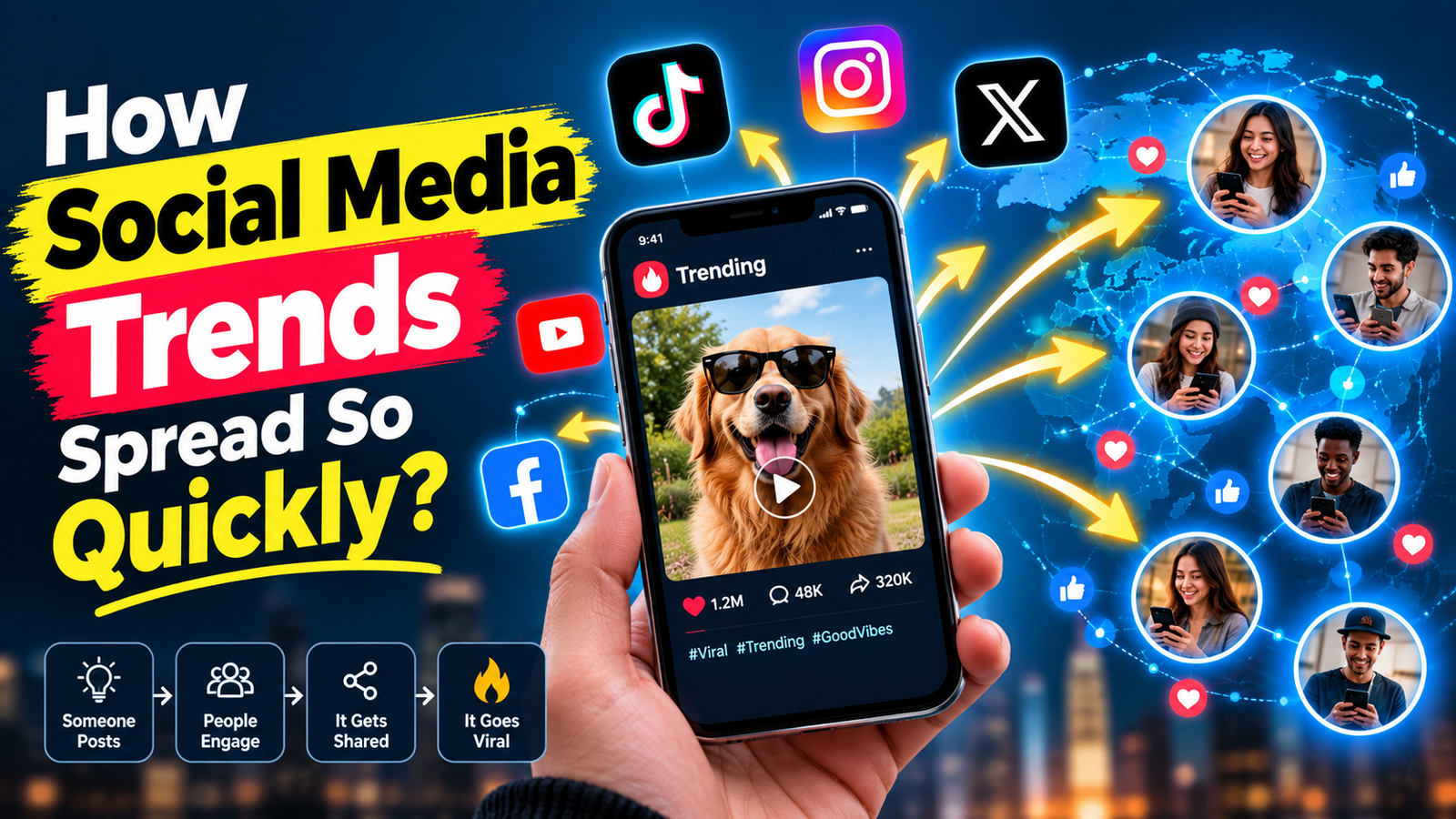
A meme can begin in a small group chat and appear on millions of screens within hours. A phrase, dance, challenge, news clip, or sound may gain attention before most users know where it started. How social media trends spread so quickly comes down to several forces working together: human emotion, recommendation algorithms, social networks, remix tools, cultural timing, and visible proof of popularity.
Virality rarely has one cause. A post must catch attention, give people a reason to share, and make participation easy. When those conditions meet the right audience at the right time, each interaction can create more reach than the one before it.
Emotional Content Gives Trends Their First Burst of Momentum
Strong emotion helps content break through crowded feeds. Surprise, humor, anger, anxiety, curiosity, inspiration, and recognition can all make people pause, remember, discuss, or share a post.
Surprise interrupts ordinary scrolling
Unexpected visuals, odd statements, sudden reversals, and unusual formats create a break in the normal feed pattern. A strange opening image or sharp audio change may earn a pause that an ordinary post would miss.
That pause can lead to a replay, comment, share, or profile visit. Content feels more valuable when viewers want to show someone else the same surprising moment.
Identity turns viewers into participants
People share posts that reflect their humor, values, fandoms, jobs, communities, or beliefs. A hashtag, inside joke, or shared phrase gives users a quick way to signal where they belong.
Participation also builds connection. Joining a trend can tell others, “I understand this,” or “This group includes me.” That social meaning often makes a post more shareable than content that is only entertaining.
Simple formats invite quick action
Trends spread faster when people can copy or adapt them without special skills. Catchphrases, sounds, filters, captions, dances, reaction styles, and short prompts all reduce the work required to join.
For creators, the useful pairing is clear: start with an easy-to-feel emotion, then attach it to an obvious participation format.
Recommendation Algorithms Turn Early Engagement Into Massive Reach
Social platforms do not all rank content in the same way. TikTok, Instagram, YouTube, X, Reddit, and Facebook use different signals, and their systems change often. Still, recommendation feeds can expand a post far beyond its original audience.
Early engagement leads to wider testing
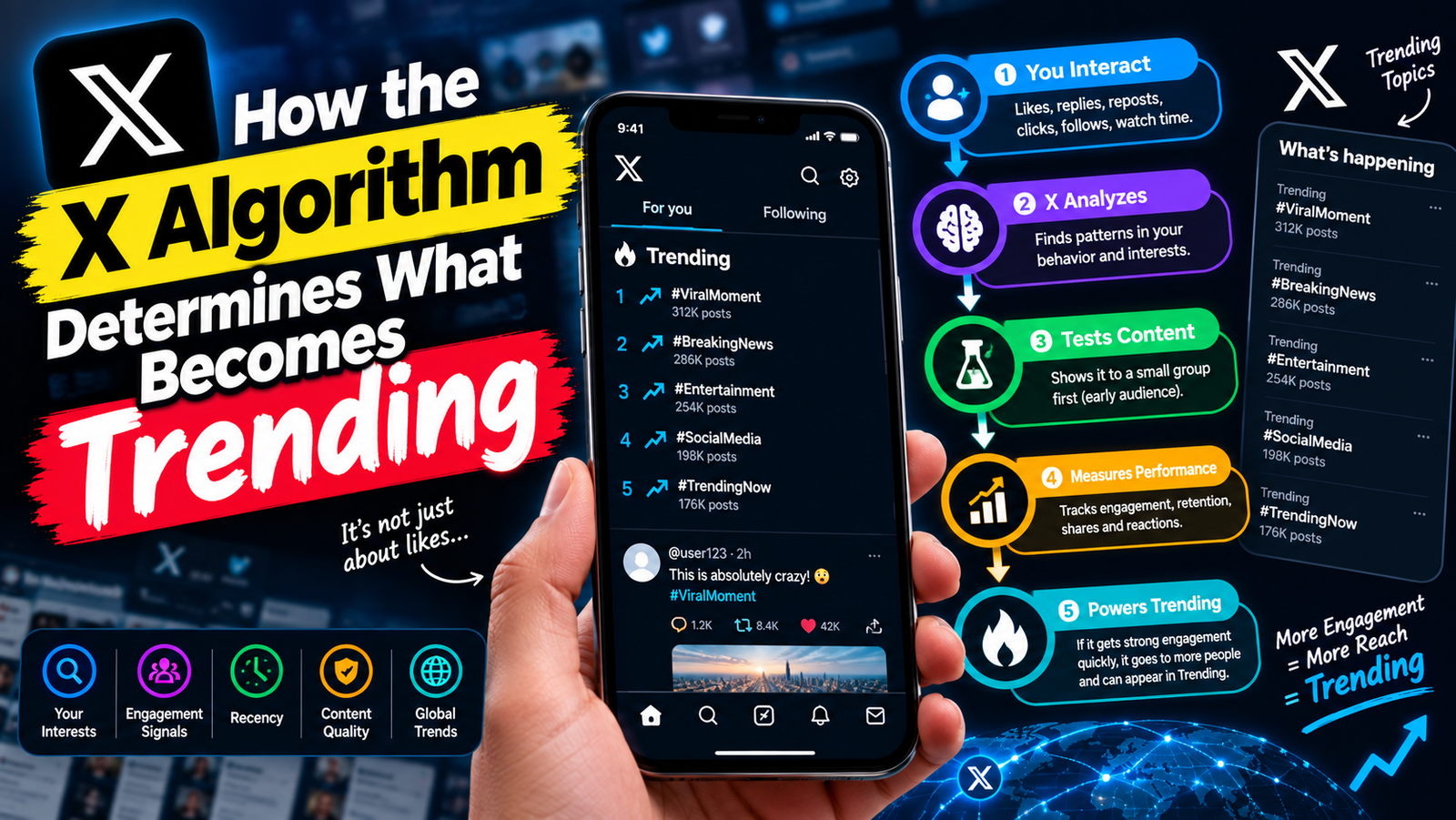
A platform may first show a post to a limited group, then measure the response. Strong watch time, completion rate, rewatches, shares, saves, comments, likes, profile visits, and low negative feedback can support wider distribution.
This process is not a guaranteed formula. A high view count alone does not prove why a trend spread. Precise conclusions require platform data and current official documentation.
Recommendation feeds reduce follower limits
Older social feeds depended more heavily on follower lists. Today, For You-style and Explore-style feeds can place a small account in front of people who have never heard of its creator.
That change affects how trends begin. A post does not need a large audience at the start. If it connects with early viewers, the platform can carry it into new interest groups.
Retention keeps a trend in circulation
Short videos often put the main visual, question, conflict, or transformation near the beginning. Fast pacing, captions, loops, and delayed payoffs can encourage viewers to keep watching.
Better retention may give more people a chance to encounter a trend, but no single metric guarantees virality. Creators should test the opening seconds rather than hide the main idea behind a long setup.
Network Effects Make Each Share More Valuable
Social media trends compound as they pass through connected groups. Each new audience can add its own interpretation, which gives the content another reason to travel.
Shares connect separate communities
A trend may move through reposts, quote posts, reaction videos, duets, stitches, group chats, and cross-platform uploads. A joke that starts with gamers might later reach sports fans, teachers, or music communities after users change its context.
Direct sharing and algorithmic discovery work together, but they are different paths. A friend can send a post directly, while a recommendation feed can place it before someone with no connection to the original creator.
Influential accounts create audience bridges
Celebrities, journalists, brands, experts, and community leaders can expose a trend to large or specialized groups. Their influence may come from trust, expertise, timing, audience size, or skillful adaptation.
A niche creator can matter as much as a famous account if they reach the right community. The strongest bridge often adds a fresh angle instead of copying the original post word for word.
Remixing Helps Trends Last Longer
Exact copying can make a format feel stale. Trends often survive because users personalize them, add new jokes, or apply them to different situations.
Open formats support many variations
A recognizable sound, prompt, transition, caption style, challenge, or reaction gives users a starting point. The format still leaves room for personal answers, parody, and local references.
That balance matters. A trend with several possible interpretations can attract more people than one that demands perfect imitation.
Built-in tools lower participation barriers
Audio libraries, templates, filters, collaborative posts, editing tools, and remix features reduce the time needed to create a response. More accessible tools can lead to a larger volume of derivative content.
Creators can help by offering a reusable sound, clear prompt, visual structure, or simple format that works on a phone.
Cross-platform movement expands reach
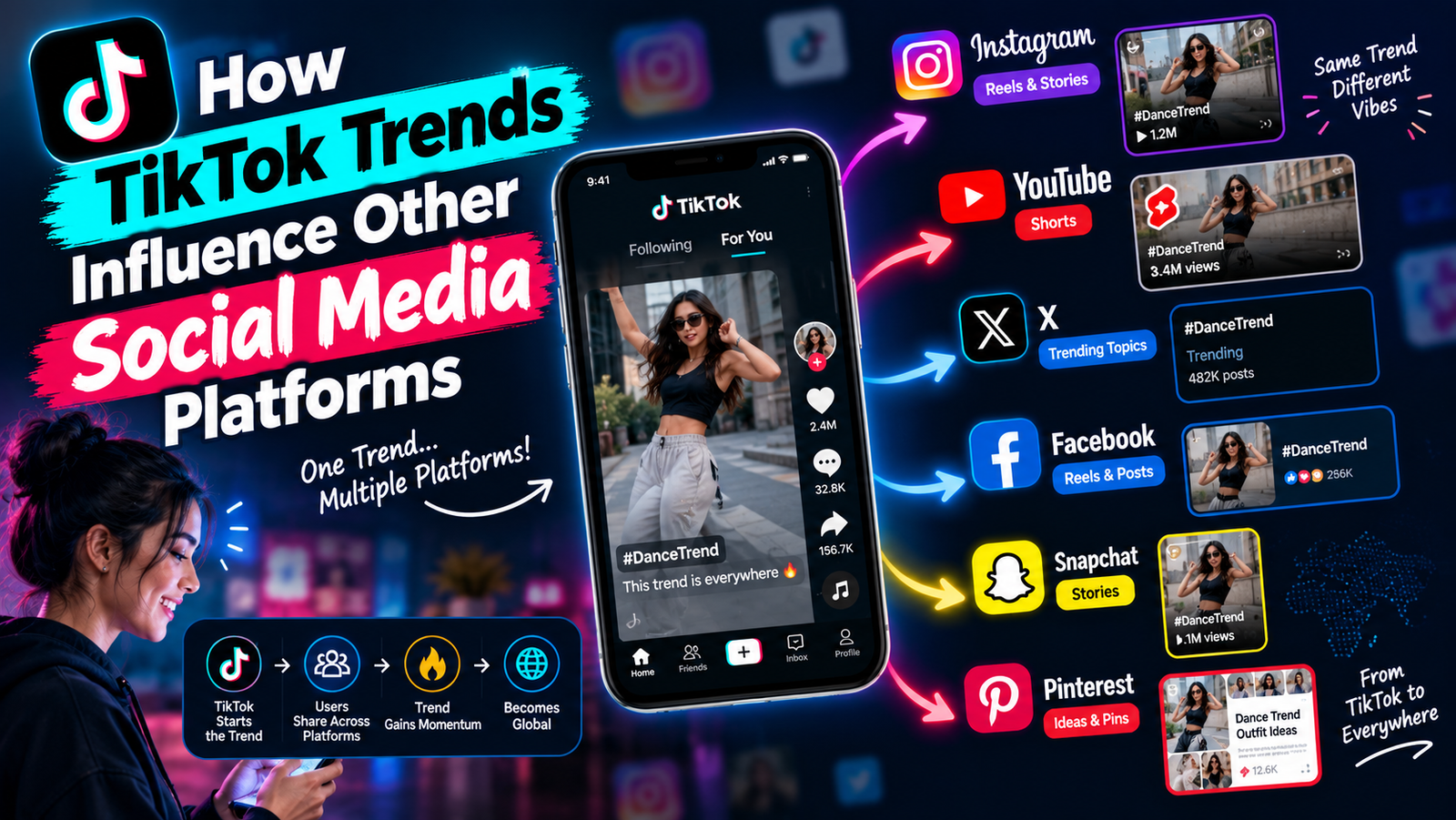
A short video may become a screenshot on X, a discussion thread on Reddit, a reaction clip on YouTube, or a message shared through Facebook and private chats. Each platform changes the format and may introduce the trend to a different audience.
Translation, subtitles, music, and visual humor also help trends cross language borders. Global reach rarely means identical use. People adapt formats to local customs, slang, and current events.
Timing Makes Social Media Trends Feel Relevant
Content spreads faster when it connects with a live conversation. Seasonal habits, entertainment releases, public debates, shared frustrations, product launches, and major events can give a trend immediate meaning.
Cultural readiness speeds adoption
Audiences are more likely to adopt a phrase, image, or joke that expresses something already on their minds. A simple format can turn a complex topic into a reaction people understand at once.
Timing alone cannot create lasting reach. The content still needs an emotional hook, a clear format, and a path to distribution.
Live events focus collective attention
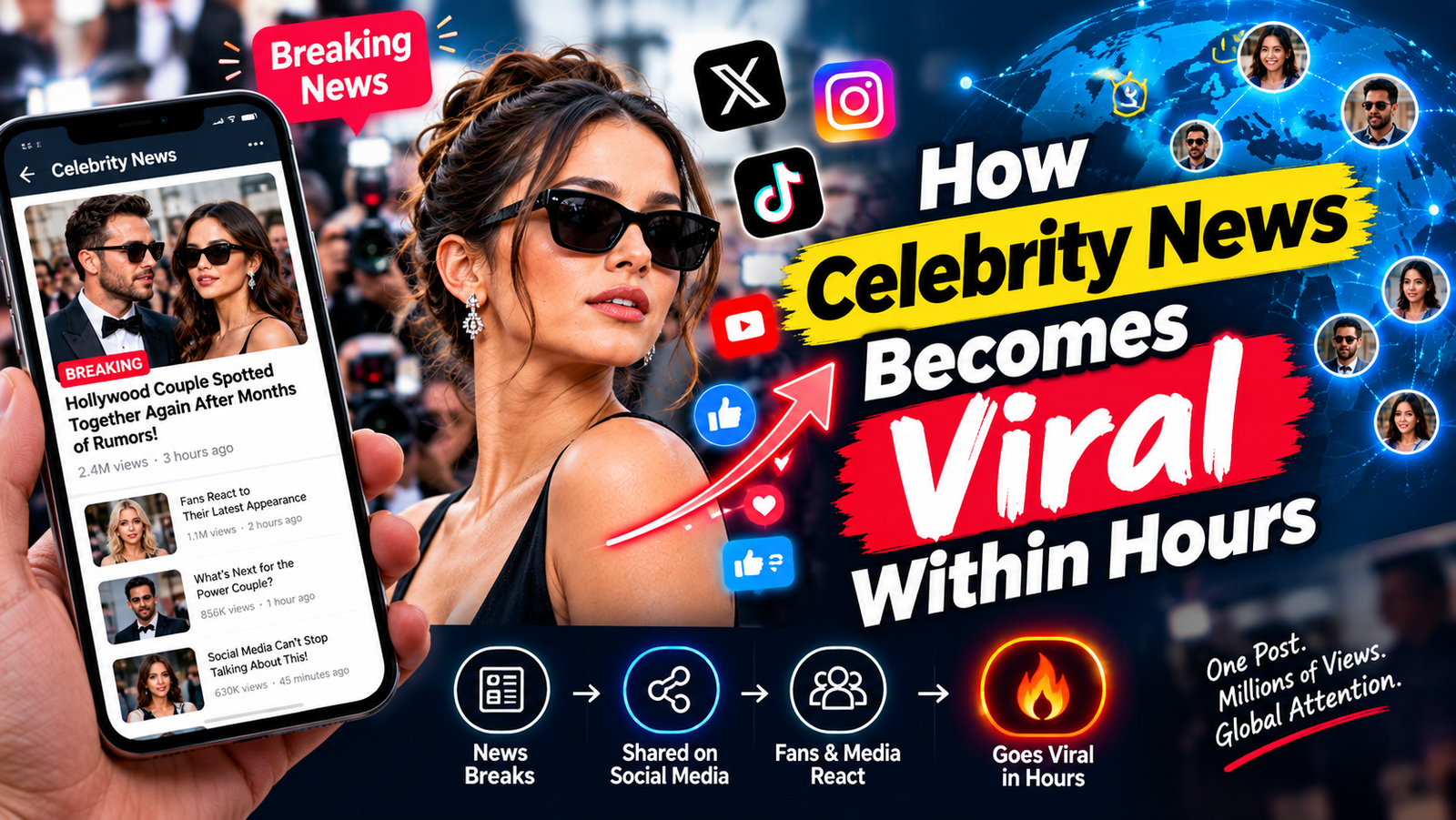
Sports matches, award shows, elections, crises, and product launches create short periods when many people post and watch at the same time. Real-time attention encourages commentary, parody, reaction videos, and rapid remixing.
That speed can also create risks. Creators and brands need care when a trend connects to tragedy, conflict, or vulnerable people.
Social Proof Pushes Trends Into the Mainstream
Visible engagement tells users that a post may matter. View counts, likes, comments, reposts, trending labels, creator endorsements, and news coverage can encourage more people to watch or participate.
Popularity signals create feedback loops
Repeated exposure makes a trend seem larger and more important. Users may engage because others already have, while each new interaction creates more evidence for future viewers.
These signals are imperfect. Metrics may be personalized, delayed, manipulated, or hidden from some audiences. A trend can feel universal inside one recommendation group while remaining unknown elsewhere.
Fear of missing out speeds participation
People often join a trend to stay part of a conversation, gain attention, or avoid feeling excluded. Trending sounds and short-lived jokes create pressure to respond while the format still feels fresh.
Brands and creators should act while a trend fits their audience, but forced participation can damage trust. Relevance matters more than speed.
Trends Fade When Attention or Participation Weakens
Virality usually fades because novelty declines, users move to a new format, or the platform changes how content reaches people. A trend can also lose momentum when participation becomes too hard.
Saturation reduces curiosity
Repeated exposure makes familiar content less rewarding. Users may disengage when a format becomes predictable, overly commercial, or disconnected from its original context.
A meaningful variation can refresh a trend. Repeating the same version without adding value usually speeds its decline.
Platform changes can redirect distribution
Recommendation updates, moderation rules, copyright limits, audio removal, search changes, and new content formats can all affect reach. A decline may reflect weaker audience interest, reduced distribution, or both.
Current platform documentation offers a better guide than old assumptions about how algorithms work.
Barriers stop trends from scaling
Complicated instructions, unavailable tools, safety concerns, copyright restrictions, language gaps, and high production demands limit replication. Accessible trends give more people a chance to participate across devices, regions, and skill levels.
How Creators and Brands Can Join Trends Responsibly
Virality cannot be guaranteed, but creators can improve the odds of useful participation. Start by choosing the human response you want: surprise, amusement, recognition, curiosity, inspiration, or discussion.
Make the response clear through concise prompts, captions, familiar formats, and native platform tools. Test whether someone who has never seen the original post can understand how to reply or recreate it.
Adapt trends to your audience, expertise, product, or point of view. Do not copy a popular format when it clashes with your values or treats a serious event as a joke. Track retention, completion rate, shares, saves, meaningful comments, profile visits, conversions, and audience sentiment instead of relying on views alone.
Credit original creators and communities where appropriate. Respect copyright, disclose sponsorships, avoid misleading edits, and ask whether a trend could harm people who are already vulnerable.
Conclusion: Social Media Trends Spread Through Compounding Attention
Social media trends spread quickly when several forces reinforce one another. Emotion earns the first pause. Algorithms expand exposure beyond follower counts. Shares and influential accounts carry content into new communities, while remix tools make participation easier.
Cultural timing adds relevance, and visible popularity gives more users a reason to join. Trends spread fastest when they are easy to recognize, emotionally clear, and simple to recreate.
Use those principles to create work people can understand and adapt, then measure the response with care. The strongest trend participation feels relevant to the audience, respects the original creators, and adds something worth sharing.