


A few seconds at the 2022 Oscars became a global conversation. Will Smith walked onto the stage and struck Chris Rock during the live broadcast, then returned to his seat before winning Best Actor. Reuters, the Associated Press, and the BBC covered the incident, while social platforms filled with clips, memes, arguments, and searches for more context.
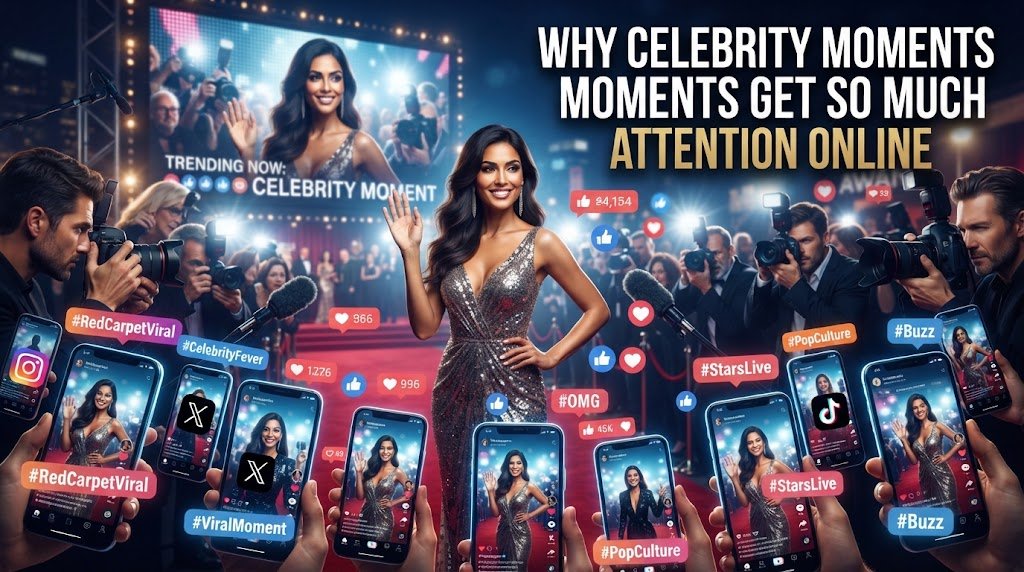
That moment shows why celebrity moments spread so widely. Fame provides a ready-made audience. Emotion drives sharing. Parasocial relationships make events feel personal, while algorithms and commercial media keep the story in front of users. Together, these forces explain why celebrity moments get so much attention online.
Why Celebrity Moments Get So Much Attention Online
Fame Creates a Ready-Made Audience
Celebrities already have followers, fan pages, entertainment reporters, podcasts, and search demand. A private action by an unknown person may stay private. A similar action by a famous actor can become celebrity news within minutes.
The first wave often comes from fans. They like posts, share clips, publish reaction videos, and argue in comment sections. Those early signals can push a moment beyond its original audience and create viral celebrity moments.
A Google Trends chart can help show this change in attention. For example, a comparison around the March 27-28, 2022 Oscars can show search interest during the incident against Will Smith’s usual level. The chart measures relative interest, not a total number of searches, so its dates and location should be clear.
Public Personas Create Meaning
People rarely view a celebrity event as an isolated act. They connect it to the person’s past roles, relationships, public statements, and reputation. A joke may seem harmless when aimed at one star but offensive when aimed at another.
Audiences may see a celebrity as relatable, rebellious, kind, fake, or trustworthy. A new moment then confirms or challenges that image. Celebrity culture gives ordinary behavior a larger meaning because millions of people already have an opinion about who the person is.
Emotion Turns Seconds Into Shareable Content
Surprise and Conflict Create Curiosity
Unexpected behavior creates a need for answers. Users search for what happened, what came before, and what each person said afterward. Public disagreements, award-show incidents, relationship news, and sudden comments all create this pressure for context.
The Oscars incident combined surprise, conflict, a live audience, and a famous cast of people. The event lasted seconds, but later statements, coverage, and debates kept it active. Uncertainty helped the story travel because people shared both the footage and their own interpretation.
Humor and Outrage Extend the Story
Memes, screenshots, parody clips, captions, and reaction images give users easy ways to join a discussion. Someone doesn’t need to write an essay. A short joke or edited video can add another layer to the event.
Online outrage creates a similar effect through moral judgment. Users debate accountability, privacy, double standards, and whether an apology sounds sincere. High engagement doesn’t prove approval. Criticism can spread content as widely as praise, and disagreement often creates more replies than agreement.
Parasocial Relationships Make Celebrity Events Feel Personal
Fans Read Events Through Attachment
Media scholars Donald Horton and R. Richard Wohl described parasocial interaction in 1956. The term refers to a one-sided feeling of familiarity with a public figure. Regular exposure through films, music, interviews, livestreams, and social posts can make a celebrity feel familiar, even without a real friendship.
That attachment shapes fan engagement. Fans may defend a star during criticism, celebrate a success, or feel hurt when behavior clashes with their expectations. A celebrity moment can feel personal because it challenges a relationship that exists in the audience’s mind.
Fan Groups Build Shared Stories
Hashtags, fan pages, Reddit communities, group chats, and comment sections help people develop a shared view of an event. Users may post content to support a favorite celebrity, challenge a rival fan base, or show loyalty to a group.
Celebrity relationships gain attention for the same reason. Romances, friendships, breakups, and collaborations unfold like continuing stories with familiar characters. Public interest in Taylor Swift and Travis Kelce grew around confirmed appearances and statements, while fan theories about lyrics, clues, and publicity often moved beyond verified facts.
Algorithms Widen the Crowd
Engagement Signals Reward Strong Reactions
Algorithms don’t create interest from nothing. They can amplify posts that receive fast interaction, long watch times, rewatches, comments, shares, or searches. Each platform ranks content differently, so no single formula explains every viral post.
A careful analysis should examine comment speed, completion rates, replay behavior, saves, and cross-platform reposts. Views, impressions, comments, and searches measure different kinds of attention. They shouldn’t be treated as equal.
Short Clips Travel With Less Context
A short video, image, quote, or headline can communicate a celebrity moment in seconds. TikTok, Instagram Reels, YouTube Shorts, and X make it easy to crop, caption, remix, and repost the same material.
That speed also creates risk. An edited clip may remove the words before a comment or the reaction afterward. Repetition across a broadcast, news article, meme, podcast, and search result can make an event feel unavoidable, even when many posts repeat the same original footage.
Media and Business Keep Celebrity News Moving
One Event Produces Many Stories
Publishers can turn one incident into a breaking-news report, timeline, explainer, opinion piece, video, photo gallery, newsletter, or interview. Each format targets a different search. Headlines often focus on conflict or curiosity, but responsible reporting separates confirmed facts from guesses.
Creators also join the discussion because celebrity attention can bring views and new followers. Brands may post memes or real-time reactions, yet a poorly timed joke can look opportunistic or cruel. Responsible participation requires checking facts, judging the seriousness of the event, disclosing paid ties, and adding a real connection to the topic.
Public Responses Create a Second Wave
Celebrities and publicists can extend or redirect a story through interviews, apologies, statements, and social posts. A clear response may correct false claims. A confusing response can create fresh questions and renew coverage.
This second wave may be organic, planned, or a mix of both. Either way, every new statement gives publishers and users another reason to revisit the original moment.
Virality Can Damage Context and Privacy
Clips Can Outrun the Facts
Screenshots, selective quotes, and edited sequences can encourage quick conclusions. Before sharing, find the original source, watch the full video, check the date, and compare reports from established outlets such as the BBC, AP, or Reuters.
Separate what viewers directly saw from what a credible source confirmed. Commentary and fan theories belong in a different category. The Reuters Institute and the News Literacy Project both stress the value of checking sources, context, and evidence before accepting a viral claim.
Public Interest Has Limits
Celebrity status doesn’t make every private detail fair game. Health information, family disputes, private messages, and claims about minors require care, especially when the information comes from anonymous accounts.
Online outrage can reward the loudest claim rather than the most accurate one. Popularity is evidence that people are paying attention. It isn’t proof that a claim is true or that coverage is justified.
How to Read a Viral Celebrity Moment
Find the Emotional Trigger
Ask what drives the sharing. Is it surprise, humor, conflict, admiration, scandal, curiosity, or identification? Naming the trigger helps explain why users respond and why one post gains more attention than another.
Then compare the original event with the online narrative. Record what happened on camera, what reliable sources confirmed, what commentators inferred, and what users merely guessed. Captions and headlines can change the apparent meaning without changing the footage.
Measure Attention With Clear Evidence
Use platform-published view counts, Google Trends, verified statements, reputable audience reports, and established news coverage. State the time period and source when citing a metric.
A search spike shows curiosity. A high view count shows exposure. Comments may show conflict or community activity. These numbers describe attention, not truth, importance, or public agreement.
Conclusion
Celebrity moments receive unusual attention because fame supplies reach, emotion drives sharing, parasocial relationships deepen investment, and algorithms widen distribution. Media companies, creators, brands, and publicists then keep the story alive through new formats and responses.
The best way to read viral celebrity news is to pause before sharing. Check the original context, separate fact from speculation, respect privacy, and treat engagement as proof of attention rather than proof of truth. The biggest viral moments gain power from several forces at once: human emotion, social identity, platform design, and the business of online media.