








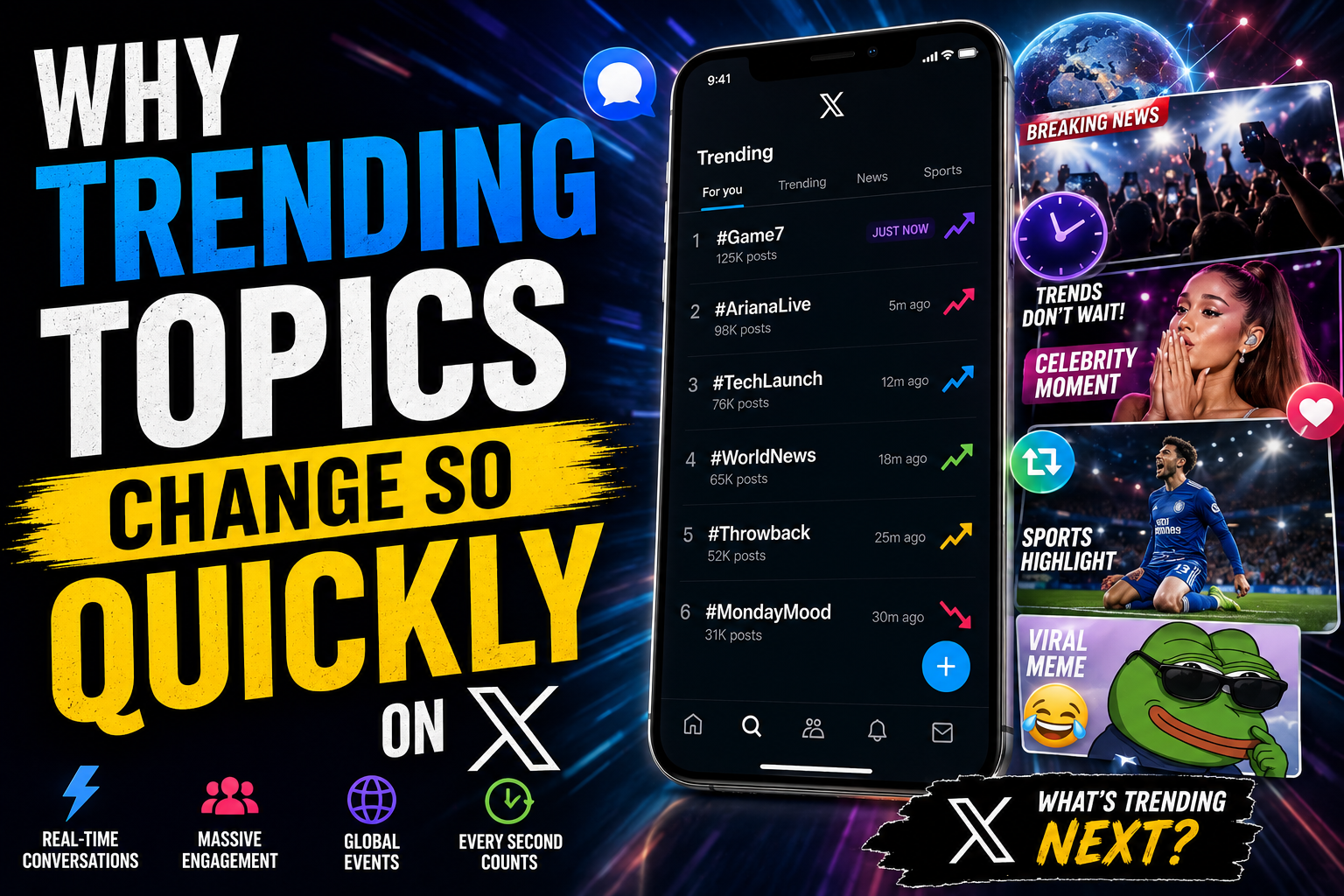
One minute, a topic fills the Trends tab. A few minutes later, a breaking story, viral post, or celebrity moment pushes it aside. The speed can feel random, but why trending topics change so quickly on X comes down to how the platform measures attention.
An X trend is not always the most discussed subject on the entire platform. It reflects a mix of conversation volume, growth speed, engagement, location, user context, and platform filtering. Understanding how X trends work, why hashtags trend, and how long trends last on X starts with one key point: X is built to surface rising conversations, not preserve a permanent ranking of the biggest topics.
X Trends Reward Momentum More Than Total Popularity
A topic may have millions of posts over several years and still lose visibility to a newer subject gaining attention at a faster rate. The trend system focuses on what is changing now.
A sudden surge can outrank a larger conversation
A sharp rise in posts, replies, reposts, mentions, or searches can push a new topic into Trends. An established discussion may have more total activity, but slow growth gives it less urgency.
This is why a surprise announcement, breaking event, or funny post can overtake a widely known subject within minutes. Trending visibility is designed to find emerging interest, not rank topics by lifetime post count.
Trend rankings refresh as attention shifts
X continuously receives new activity, so older conversations can lose their relative position as fresh ones grow. The platform does not publish a simple formula that explains every ranking, but recency and momentum clearly matter.
When tracking a topic, compare its position across several time windows. One screenshot shows attention at one moment, not the full story.
Why Trending Topics Change So Quickly on X
Visibility can create more visibility. Once a topic appears in Trends, users may click it, post about it, quote related posts, or report on it elsewhere.
That extra attention can create a short feedback loop. The topic rises quickly, then drops just as fast when users move to a newer story. Trend placement also does not prove accuracy, public agreement, or lasting cultural value.
X Personalizes Trends by Location, Interests, and User Context
Two people can open X at the same time and see different topics. Their trend views may reflect different locations, languages, interests, followed accounts, and recent activity.
Location changes which topics seem important
A city, region, or country can shape what appears in Trends. A transit shutdown may dominate a local feed while a sports final or election leads national discussions.
Weather emergencies, regional entertainment releases, public transport problems, and local political events often produce strong area-based trends. A topic can lead in one place without becoming a worldwide trend.
Personalization changes the meaning of “trending”
Selected interests, followed accounts, and engagement history may affect which conversations X places in front of a user. X’s recommendation systems can also use broader signals about relevance and activity.
Check your trend settings before comparing results with someone else. Search results and the Explore page can provide a wider view than a personalized trend list.
Language can split one event into several trends
The same event may appear under different translations, spellings, hashtags, or regional names. Those versions divide attention across separate phrases.
Before deciding that a topic has vanished, search its main keywords, common abbreviations, alternate spellings, and translated terms. The conversation may have moved rather than ended.
Breaking News and Live Events Cause Rapid Trend Turnover
X’s real-time format makes it a natural home for live reactions. During one event, several connected topics can rise and fall in sequence.
Live events create short bursts of discussion
A sports final may produce separate waves for predictions, key plays, player reactions, and post-game analysis. Award shows, product launches, political debates, and televised events follow a similar pattern.
Each new moment gives users a fresh reason to post. The result is a series of brief spikes instead of one stable trend.
Breaking news creates competing story layers
An initial report may be followed by eyewitness posts, official statements, corrections, public reaction, and discussion about false claims. Each update can redirect attention to a different phrase.
A trend signals that people are discussing a subject. It does not confirm that the claims behind it are true. Check the original source, timestamp, and later updates before sharing a fast-moving story.
Posts from journalists, public officials, celebrities, and major news outlets can move a topic beyond its first audience. Quote posts and repost chains give one update a much wider reach.
This process is sometimes called newsjacking, when people publish around a rising story while attention is already high. Speed helps, but context matters more than being first.
Engagement Mechanics Turn Small Conversations Into Large Trends
Replies, reposts, quote posts, likes, bookmarks, video views, and outside coverage all give a conversation more ways to spread. X may weigh these signals through changing ranking systems, but it does not publish a fixed public formula for every trend.
Controversy produces fast interaction
Disagreement, surprise, humor, anger, and emotional claims often prompt quick responses. High activity may include criticism, mockery, debate, or correction rather than support.
Read the replies before treating a trend as popular opinion. A large post count can show conflict, not consensus.
Hashtags and phrases gather attention
Repeated names, slogans, hashtags, and distinctive phrases help users find and join the same conversation. Misspellings, capitalization differences, and competing labels can split activity between several trend pages.
Use the exact wording shown in Trends, then search related terms for a fuller view. This method helps reveal conversations that use a different label.
Coordinated activity can distort apparent momentum
Promotional campaigns, duplicate posts, spam, automated behavior, and organized participation can make a topic look larger than its independent audience. Volume alone cannot prove that many unrelated users support a claim.
Check account age, posting patterns, timestamps, and the range of opinions involved. A healthy conversation usually includes more than repeated messages from similar accounts.
X Moderation and Ranking Filters Reshape Trend Visibility
Raw activity is only part of the picture. Safety systems, spam controls, duplicate-content checks, policy rules, and ranking changes can affect whether a topic appears or stays visible.
A viral phrase may not become an official trend
A post can go viral without its phrase appearing in Trends. A hashtag may receive heavy use while a related topic gains attention mainly through search or individual posts.
Eligibility and quality rules can affect trend placement. For current details, check X Help Center pages covering Trends, recommendations, platform manipulation, and safety policies rather than relying on old Twitter-era explanations.
Spam controls can change what users see
Suspected automation, misleading engagement, policy violations, or coordinated manipulation may reduce a topic’s visibility. A drop does not prove that X took action; people may have moved on naturally.
For publishers and marketers, authentic participation works better than repetitive hashtag posting. Useful information gives people a reason to engage without making the conversation look forced.
Product updates can change trend behavior
Changes to the Explore interface, recommendation settings, moderation rules, or paid features may alter how users experience Trends. Older articles about Twitter may describe tools or ranking behavior that no longer applies to X.
When explaining a specific change, use current X documentation and reputable platform reporting. Avoid treating an old algorithm claim as a permanent rule.
Measure a Trend’s Lifespan Before Judging Its Importance
A short trend can still matter, while a long trend can contain little useful information. Measure the conversation instead of relying on its label.
Track velocity, persistence, and reach
Velocity shows how quickly mentions or posts increase. Persistence shows how long activity stays high. Reach shows how widely the topic spreads across regions, communities, and account types.
A topic can rise at extreme speed but disappear within an hour. Another may grow slowly and remain active for days across several audiences. Record timestamps and compare trend status, search results, and engagement at different intervals.
Follow the topic beyond one label
A hashtag may disappear while the wider subject continues under new wording. Breaking news often moves through several updates, while live events shift from predictions to reactions and analysis.
Follow key people, organizations, search terms, official accounts, and reliable reporting. One hashtag rarely captures the whole conversation.
Verify what the trend actually means
Check the original post or announcement, official statements, primary documents, and reputable coverage with clear timestamps. X Help Center and policy pages can explain how the platform treats recommendations, spam, and trend eligibility.
For historical comparisons, archived screenshots or third-party trend data may help. Engagement counts and trend labels show attention, not facts or public agreement.
Conclusion: X Trends Change Fast Because Attention Is Continuously Re-Ranked
X trends change quickly because momentum can matter more than total popularity. Location, language, and personalization create different views, while breaking news and live events produce a stream of short attention spikes. Emotional engagement can speed up a trend, and moderation systems or product changes can affect how long it remains visible.
Before sharing a rising topic, check its timestamp and location. Search related phrases, inspect the original source, and read the surrounding context. Track persistence and reach before deciding that a trend reflects a lasting movement.
Understanding why trending topics change so quickly on X makes it easier to read real-time conversations, verify viral claims, and respond without confusing temporary attention with lasting significance.